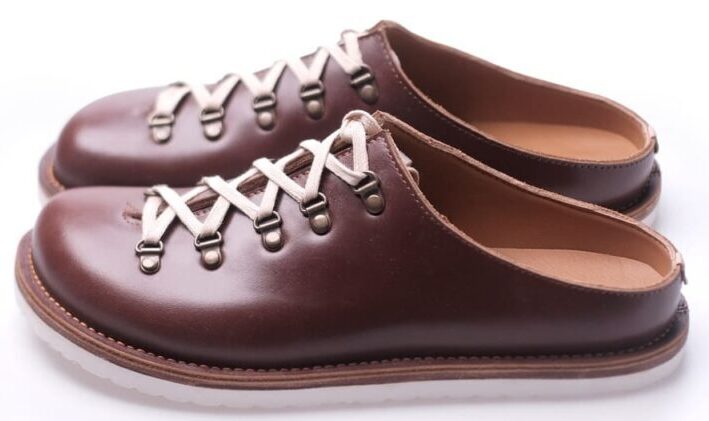
“Anatomical” and “barefoot” get thrown around a lot in footwear marketing, often attached to shoes that are neither. So it is fair to be skeptical when a leather mule claims to be both. The thing is, when the shape is actually right, you feel it within the first few minutes of wearing a pair, and it is hard to go back to a flat, generic footbed afterward.
Jescherline builds its mules around an anatomical form with a barefoot-leaning feel, drawing on roots in mountaineering footwear before translating that into something for daily wear. That heritage is not just a story. It shows up in how the sandal are shaped and how they feel underfoot. Here is what those words actually mean here, and why they add up to a genuinely comfortable sandal.
1. What “Anatomical” Actually Means for a Footbed
An anatomical footbed is shaped to follow the natural contours of a foot rather than being dead flat. That means a degree of arch support where your arch sits, a slight cradle at the heel, and contouring that matches roughly where your foot wants to land. Instead of your foot adapting to a flat plank, the sandal meets your foot where it already is.
The payoff is in how the load spreads. On a flat sole, pressure tends to concentrate in a few spots, which is what leaves your feet aching after a long day. An anatomical shape distributes that weight more evenly across the whole foot, which reduces fatigue and lets you stay on your feet longer in comfort. It is a subtle bit of design, but it is the foundation of why a well-shaped mule feels good and a cheap flat one does not.
2. The Barefoot Feel, Explained
Barefoot-style footwear is about keeping you connected to the ground and letting your foot move naturally, rather than wrapping it in thick, stiff cushioning that does the work for you. A barefoot-leaning mule has a thinner, more flexible profile, so you feel the ground and your foot flexes the way it is built to.
The benefit is a more natural stride and a stronger sense of where you are stepping. There is a reason the style has gained a following: many people find that a less interfering shoe is actually a more comfortable one over time, because it works with the foot instead of overriding it. Jescherline pairs this barefoot leaning with the structure of real leather, so you get the natural feel without the shoe going flimsy. It is grounded and supportive at the same time, which is a harder balance to strike than it sounds.
3. From Mountaineering Roots to Daily Wear
The anatomical, grippy character of these mules is not accidental. The Baffarō line in particular traces back to mountaineering footwear, built for comfort and traction over uneven ground, then carried over into an everyday backless shoe. That origin explains a lot about how the pair behaves.
Footwear designed for actual terrain has to get comfort and stability right, because there is no room for a shoe that hurts halfway up a trail. When that thinking is brought down to a daily mule, you inherit the good parts: a shape that supports you, a sole that grips, and a build meant to handle real movement rather than just sitting and looking nice. It is why a Jescherline mule feels more capable than its relaxed appearance suggests. The casual look is doing a bit of misdirection over some genuinely functional roots.
4. The Full-Lined Cowhide Footbed and Why It Matters
Comfort is not only about shape, it is about what touches your foot, and this is where the footbed material comes in. Jescherline lines its footbeds fully in cowhide leather, and it makes a real difference to how the mule feels over a day, especially worn barefoot, which is how most people wear them.
Leather against the skin breathes in a way synthetic linings do not, which keeps your foot cooler and drier and cuts down on the sweaty, sticky feeling cheaper materials give. A leather footbed also molds gradually to the shape of your foot with wear, so the cradle becomes increasingly personal to you. And it ages well, developing a smooth, worn-in surface rather than breaking down. It is the kind of detail you do not consciously notice on day one but come to appreciate after a few weeks of wear.
5. The Break-In: Leather That Molds to You
One last thing worth understanding is that an anatomical leather mule gets better with time, which is the opposite of how most footwear ages. Out of the box, a quality leather pair feels supportive but firm. Over the first stretch of wear, the leather softens and the footbed begins taking an impression of your specific foot.
This break-in is the point, not a flaw. What starts as a well-shaped, general anatomical form gradually becomes a footbed contoured to you in particular. The leather relaxes where your foot needs it to and holds firm where it should. A few years in, a well-kept pair, like a worn Baffarō, fits in a way a brand-new shoe simply cannot, because it has quietly recorded how you walk. That is something only real leather over a real anatomical shape can do, and it is the long reward for choosing one.
Comfort You Grow Into
Anatomical and barefoot are easy words to claim and harder to actually build. The difference shows up in the wearing: a shape that supports the whole foot, a barefoot feel that keeps you connected and moving naturally, mountaineering-bred stability, a breathable leather footbed, and a break-in that makes the pair more yours over time. Put together, that is why a Jescherline mule feels better than its casual look lets on, and why the comfort is the kind that deepens rather than fades.