


There comes a moment when you spot someone wearing leather boots with a beautifully developed patina, and suddenly a thought crosses your mind: “It would be nice to have a pair like that.” That’s usually how someone’s journey with local boots begins. But the moment you start searching, the first thing that confuses most people is how to choose a first pair you won’t end up regretting.
The options for local boots in Indonesia are actually quite plentiful, especially after many Indonesian boot brands started seriously producing handmade pieces with international standards. One name that often comes up as a reference is TXTURE, a Bandung-based bootmaker that has been running since 2009. So, to make sure your first step into the world of local boots doesn’t lead you astray, here are 8 tips worth considering.
1. Understand Your Needs First, Don’t Get Trapped by Aesthetics
This first step is often overlooked by first-time buyers. Before choosing a model or brand, try answering a simple question: what are these boots going to be used for? Daily office wear, weekend hangouts, out-of-town trips, or simply pairing with casual outfits?
Your answer will strongly determine which model you should be looking for. If your needs lean toward semi-formal pairings, a service boot or Chelsea boot is clearly more suitable than a work boot. On the other hand, if you often walk in wet terrain and need something more rugged, models like moc toe or lineman boots make more sense. Many buyers get tempted by Instagram photos only to end up with boots that are never worn because they don’t match their lifestyle.
2. Learn the Basic Terminology of Local Boots
Stepping into the world of local boots is a bit like learning a new language. There are terms like Goodyear welt, handwelted, stitchdown, full-grain leather, shell cordovan, and pull-up. Without understanding the basics, you’ll struggle to compare one product with another.
A few of the most important terms to know:
- Goodyear welt: a construction method that allows shoes to be resoled multiple times
- Handwelted: the manual version of Goodyear welt, neater and more expensive
- Full-grain leather: the highest grade of leather with its natural surface layer intact
- Patina: the natural color change on leather due to wear
- Last: the mold that determines the final shape of a boot
With this basic vocabulary, you’ll feel more confident when asking questions to customer service teams at brands like TXTURE, or when comparing two models from different manufacturers.
3. Research a Brand’s Reputation Before Handing Over Your Money
In Indonesia, there are many active Indonesian boot brands, ranging from those that have only been established for a few years to those with more than a decade of experience. Before buying, take the time to research your brand of interest. Check how long they’ve been active, where their workshop is located, how their customer service is perceived, and whether they’re consistent in their production quality.
TXTURE, for instance, is a brand that’s relatively easy to verify. They have their own workshop in Bandung, operate as a family-run business, and their products have received reviews from international boot communities such as Grailed and Stridewise. This kind of information matters because handmade boots aren’t cheap, and you don’t want to pay a premium price for something whose quality is still in question.
4. Pay Serious Attention to the Leather
The type of leather is the component that most strongly determines the character of a pair of local boots. Full-grain leather from a reputable tannery will provide a very different experience compared to ordinary genuine leather. Its character feels sturdier, its grain is more interesting, and most importantly, it will develop according to how you wear it.
A few leather materials commonly found in premium local boots:
- Local full-grain leather with pull-up character
- Imported leather from renowned tanneries like Horween and Charles F. Stead
- Shell Cordovan for the top-tier segment
- Suede and roughout for a more casual character
TXTURE is one of the brands that’s fairly open about the origin of its materials. In their products, you can find combinations of local and imported leather, with a fairly wide range of choices through their made-to-order service. This kind of transparency holds significant value, especially for buyers who care about where their material comes from.
5. Sizing and Last: Don’t Just Guess When Ordering
This is often the biggest mistake first-time local boots buyers make. Handmade boots aren’t sized uniformly like athletic shoes. Each brand has its own last, and one last can feel very different from another even in the same stated size.
Before ordering online, try on another welted shoe whose sizing you’re already familiar with whenever possible. Some Indonesian boot brands, including TXTURE, even ask buyers to mention any welted boots they already own so the last calculation can be more accurate. If you’ve never worn welted boots at all, visiting an offline store is far safer than guessing online.
6. Calculate Long-Term Cost, Not Just the Initial Price
Many beginner buyers are shocked by the price of premium local boots. Why can one boot be under Rp1 million, while a Bandung handmade boot reaches Rp3 million or more? The answer lies in the long-term calculation.
Cemented boots (glued construction) typically last 1–2 years before the sole separates and becomes difficult to repair. Goodyear welt boots with normal care can last 7–10 years, even longer, with 2–3 resoles in between. That means, over the same period, handmade boots actually cost less per wear than cheap boots that fall apart quickly.
A Stridewise review in 2026 even noted that Indonesian boots are generally priced at about half the cost of American boots with comparable specifications. So from a value standpoint, local boots actually offer a compelling quality-to-price ratio.
7. Take Advantage of Made-to-Order Services When Possible
One of the most notable advantages of local boots in Indonesia is the flexibility of made-to-order (MTO) service. You can choose the type of leather, welt color, sole type, tongue design, and hardware style. Services like this from foreign brands are usually far more expensive or not available at all.
TXTURE, for instance, accepts MTO orders with fairly detailed options. Buyers can combine Charles F. Stead Oiled Hatch Shoulder leather with a Vibram sole, lambskin memory foam padding, and solid brass hardware, all according to personal preference. For those who truly want a personalized boot, this kind of service is a strong reason to choose local boots over off-the-shelf products from foreign brands.
Keep in mind, however, that MTO usually takes several weeks to months depending on the production queue. So if you need something quickly, it might be wiser to consider ready stock first.
8. Care for Them Properly So the Investment Pays Off
One thing that beginner buyers sometimes overlook: handmade local boots need maintenance. Leather boots aren’t disposable footwear. For the patina to develop beautifully and the lifespan to be long, there are some basic steps worth taking.
Key maintenance points to keep in mind:
- Clean off dust with a dry cloth or soft brush after wearing
- Apply leather conditioner every 2–3 months
- Don’t store boots while they’re damp after rain; let them dry naturally
- Use cedar shoe trees to maintain shape and absorb moisture
- Resole at a trusted bootmaker when the sole starts to wear out
Some Indonesian boot brands, including TXTURE, offer resoling and repair services for their own products. So when your boots have been worn for several years and need some care, they can be sent directly back to the workshop where they came from.
Closing Thoughts: Local Boots as a Sensible Choice
Buying local boots for the first time can feel intimidating due to the many terms and variations you have to understand. But once you know the basic principles, the process becomes much more enjoyable. And once you reach that point, you’ll realize just how rich the Indonesian boot scene really is, from major players like TXTURE to new brands that keep emerging each year.
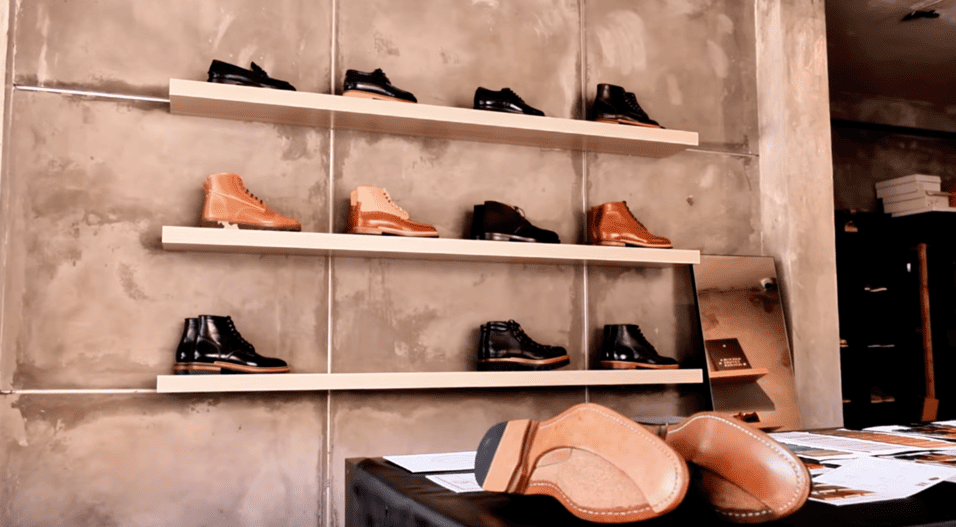
For those ready to start looking for references, TXTURE’s collection can be viewed on the official website at txtureboots.com or at their offline stores in Jakarta. At the very least, seeing handmade products in person can help you better understand what you’re actually paying for when buying a pair of quality local boots.